
Introduction
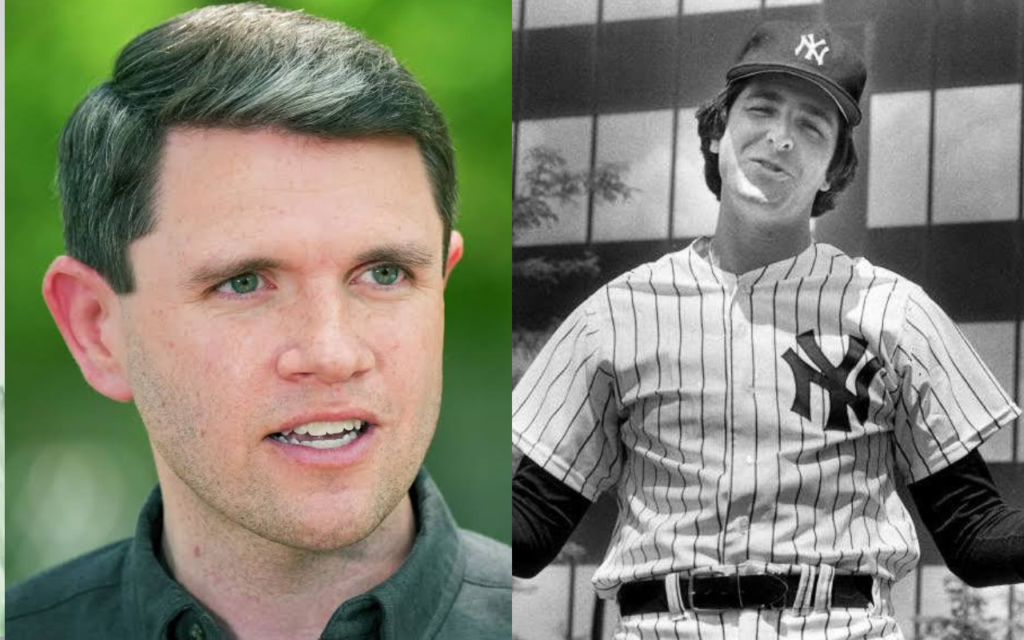
Barry Bremen was an American businessman who became famous for his unusual ability to enter major sporting events by pretending to be a professional athlete, referee, or other authorized participant. Known as “The Great Imposter,” he gained national attention during the late 1970s and 1980s through a series of remarkable stunts that challenged security arrangements at some of America’s biggest sporting events. His story combined humor, confidence, ambition, and a fascination with professional sports.
Unlike traditional celebrities, Bremen did not become famous through acting, music, or professional athletics. Instead, he created his own public identity by disguising himself as people who belonged in places where ordinary fans were not permitted. He appeared at basketball games, baseball championships, football events, golf tournaments, and even the Emmy Awards. His ability to convince others that he belonged in restricted areas made him a memorable personality in American sports culture.
Beyond his public stunts, Bremen was a businessman, husband, and father. Years after his death, a documentary revealed another significant part of his life involving sperm donation and dozens of biological children. This unexpected discovery added a personal dimension to his story and brought renewed attention to his legacy.
Who Was Barry Bremen?
Barry Bremen was born on June 30, 1947, in Detroit, Michigan, United States. He later became known as an enthusiastic sports fan, businessman, and professional prankster. His nickname, “The Great Imposter,” reflected his unusual talent for presenting himself as someone he was not and gaining temporary access to prestigious events.
Bremen’s approach was different from ordinary sports fandom. Instead of watching professional athletes from the stands, he wanted to experience the atmosphere of the playing field and interact with the people he admired. He used costumes, confidence, preparation, and a convincing manner to make his appearances possible.
His stunts attracted widespread media coverage because they were unexpected and often humorous. At a time when professional sporting events were becoming major television spectacles, Bremen found ways to turn himself into part of the action, even when he had no official role.
His activities were not always harmless jokes. Entering restricted areas without authorization could lead to removal, legal consequences, and security concerns. Nevertheless, his most famous appearances became stories that sports fans continued to discuss long after the events themselves.
Bremen’s life demonstrates how an unusual idea, combined with determination and a willingness to take risks, can create an unexpected kind of public fame.
Early Life and Business Career
Bremen grew up in Michigan and developed a strong interest in sports. He enjoyed recreational activities, including basketball, softball, and touch football. Although he was not a professional athlete, his familiarity with sporting culture helped him understand the behavior, clothing, and routines of players and officials.
Before becoming a nationally recognized prankster, Bremen worked in business and sales. Accounts of his life describe him as a novelty-goods salesman who was comfortable dealing with people and presenting products. His professional experience may have helped him develop the confidence and communication skills that later became central to his impersonations.
Bremen’s business background also distinguished him from people who perform pranks purely for entertainment. He approached his activities with planning and preparation, sometimes acquiring uniforms and arranging assistance before attempting to enter an event.
His interest in sports gave him a clear target for his creativity. Major sporting events offered large audiences, famous participants, and busy environments in which someone wearing the right clothing might initially appear to belong. Bremen recognized these opportunities and repeatedly tested the limits of event security.
Although his business career received less attention than his stunts, it provided an important foundation for understanding his personality. He was someone who enjoyed making an impression, taking unconventional approaches, and finding opportunities that other people might overlook.
The Rise of The Great Imposter
Bremen’s national reputation began growing in 1979, when he successfully entered sporting environments by impersonating professional athletes. One of his early famous basketball stunts took place at the NBA All-Star Game at the Pontiac Silverdome in Michigan.
Wearing a Kansas City Kings uniform, Bremen managed to join players during warm-ups. For a short time, he appeared to be another member of the professional basketball environment before officials discovered that he was not an authorized player.
The incident helped establish his distinctive approach. He did not simply attend events in disguise; he attempted to behave as though he had a legitimate reason to be there. This confidence was essential to his success, as uncertainty or hesitation could have attracted attention much sooner.
The stunt received media attention and encouraged Bremen to attempt similar appearances at other major competitions. His activities became increasingly ambitious as he moved between professional basketball, baseball, football, and golf.
News coverage helped turn Bremen into a recognizable public figure. His appearances were unusual enough to attract journalists and television producers, while his personality made him an appealing subject for interviews.
He eventually appeared on popular television programs, including The Tonight Show Starring Johnny Carson. These appearances helped introduce his story to people who might not otherwise have followed sports news.
The Dallas Cowboys Cheerleader Prank
One of Bremen’s most famous stunts occurred on December 16, 1979, during a Dallas Cowboys game against the Washington Redskins at Texas Stadium in Irving, Texas.
For this appearance, Bremen disguised himself as a Dallas Cowboys cheerleader. Reports describe how he prepared carefully, including shaving his legs, wearing a blond wig, and obtaining a replica cheerleader uniform. His wife, Margo, reportedly helped him prepare and practice his performance.
Once inside the stadium environment, Bremen attempted to join the cheerleaders on the sidelines. His appearance attracted attention, and he reportedly managed to shout “Go Dallas!” before security personnel recognized him and removed him.
The incident became one of the defining moments of his career. The combination of an elaborate costume, an unexpected appearance, and a major professional football game made the prank especially memorable.
The stunt also illustrated the risks involved in his activities. Although Bremen’s intentions were often presented as humorous, impersonating an authorized participant and entering restricted areas could create real problems for event organizers.
The Cowboys cheerleader incident remained one of the most frequently discussed examples of his creativity. It showed how much preparation he was willing to invest in a joke and how determined he was to become part of the sporting spectacles he admired.
Baseball, Basketball, Football, and Golf Stunts
Bremen’s impersonations extended across several major American sports. In July 1979, he appeared at the Major League Baseball All-Star Game in Seattle wearing a New York Yankees uniform. With assistance from sportscaster Dick Schaap and baseball player George Brett, he managed to join outfield warm-ups before his unauthorized presence was discovered.
He also appeared at the 1980 World Series dressed as an umpire. The appearance was particularly striking because professional baseball games have a defined number of officials, making an unexpected extra umpire difficult to explain once someone examined the situation closely.
Basketball remained another favorite target. At the 1981 NBA All-Star Game, Bremen wore a Houston Rockets uniform and again attempted to participate in warm-ups. These appearances reflected his desire to get as close as possible to the athletes and events that fascinated him.
Football provided additional opportunities. Bremen attempted to enter Super Bowl XV in 1981 dressed as a line judge. He also tried to access Super Bowl XVI while dressed as the San Diego Chicken, a famous sports mascot, but was stopped.
Golf was another important part of his story. During the 1979 U.S. Open practice environment, he played alongside professional golfers Wayne Levi and Jerry Pate. He returned to the tournament setting in 1980 and made another notable appearance at the 1985 U.S. Open at Oakland Hills Country Club in Michigan.
At the 1985 event, Bremen reportedly joined a practice group that included Fred Couples, Jay Haas, Curtis Strange, and Bob Eastwood. His golf stunts required more than a convincing uniform; he also needed to understand the etiquette and routines of the sport.
These episodes established him as a persistent figure whose impersonations crossed multiple sporting disciplines.
The Emmy Awards Incident
Bremen’s interest in impersonation eventually extended beyond athletics. In 1985, he attended the Emmy Awards in Pasadena, California, and carried out one of his best-known non-sporting pranks.
When Betty Thomas, recognized for her work on Hill Street Blues, was announced as an award winner, Bremen stood up and accepted the award before she reached the stage. His unexpected action briefly confused the audience and disrupted the ceremony.
The incident demonstrated that Bremen’s activities were not limited to professional sporting events. He was willing to test security arrangements and social expectations at another high-profile public gathering.
Unlike some of his earlier stunts, the Emmy Awards incident had legal consequences. Reports stated that he was arrested and fined $175. He later apologized to Thomas, reportedly explaining that he had believed she was not present to accept the award.
The episode reinforced his reputation as someone capable of appearing unexpectedly at prestigious events. However, it also demonstrated that impersonation could cross the line between an entertaining prank and conduct with real consequences.
For Bremen, the incident became another chapter in a career built on surprising people in places where they did not expect to find him.
Wife, Children, and Family Life
Barry Bremen was married to Margo, and the couple raised three children together. Although his public reputation centered on sporting pranks, his family life was another important part of his personal history.
Margo reportedly supported some of his unusual preparations, including helping him practice for the Dallas Cowboys cheerleader stunt. Their involvement in that episode became part of the story of how he planned his appearances.
For many years, Bremen’s family life remained less widely known than his public exploits. His children and marriage received comparatively little attention because the media primarily focused on his ability to enter sporting events.
A different aspect of his family history emerged after his death. Bremen had donated sperm, and subsequent investigations revealed that he had dozens of biological children in addition to the three children he raised with his wife.
In 2022, ESPN’s documentary The Great Imposter and Me explored this discovery and the experiences of people who learned through DNA testing that they shared Bremen as a biological father. Some of these individuals found one another through genetic matching services, which helped them uncover previously unknown family connections.
The discovery raised questions about identity, family relationships, and the role of consumer DNA testing in revealing information that had remained hidden for decades. It also introduced a new generation of viewers to Bremen’s story.
This part of his life added complexity to his public image. The man remembered for amusing sports impersonations had also left behind a biological family whose members were only beginning to understand their shared history.
Death, Documentaries, and Lasting Legacy
Barry Bremen died on June 30, 2011, in Scottsdale, Arizona, on his 64th birthday. Published obituaries reported that he died from esophageal cancer. His death marked the end of a life that had attracted attention through some of the most unusual pranks in American sports culture.
His legacy continued through documentaries and retrospective coverage. In 2013, ESPN Films released The Great Imposter, a short documentary in its 30 for 30 Shorts series. The film revisited his sporting stunts and examined the personality behind his public reputation.
In 2022, The Great Imposter and Me explored his story from another perspective, focusing on the discovery of his biological children. The documentary connected the history of his public impersonations with the personal consequences of his sperm donations.
Bremen’s story remains unusual because it combines humor, controversy, ambition, and unexpected family revelations. His stunts exposed weaknesses in event security and challenged the boundaries between spectators and participants.
At the same time, his life illustrates how public figures can have personal histories that are very different from the stories for which they become famous. Although Bremen is primarily remembered for his impersonations, his family connections and the later DNA discoveries remain important parts of his legacy.
Conclusion
Barry Bremen, widely known as The Great Imposter, became famous by disguising himself as professional athletes, referees, and other authorized participants at major American sporting events. From basketball and baseball to football and golf, his stunts made him a recognizable figure during the late 1970s and 1980s.
His impersonation of a Dallas Cowboys cheerleader and his unexpected appearance at the Emmy Awards became especially memorable episodes. These events demonstrated his creativity and confidence while also revealing the legal and practical risks of entering restricted areas without permission.
Beyond his public activities, Bremen was a businessman, husband to Margo, and father. The discovery of dozens of biological children after his death added an unexpected dimension to his life story and renewed public interest through documentary filmmaking.
He died in 2011 at the age of 64, but his name remains associated with some of the most unusual impersonations in American sports history. His biography is a reminder that a person’s legacy can extend far beyond the public identity that initially made them famous.