
Introduction
Mae Capone, born Mary Josephine Coughlin, is remembered primarily as the wife of Al Capone, one of the most famous gangsters of the Prohibition era. However, her own life stretched far beyond her husband’s criminal reputation. Born into an Irish-American family in Brooklyn in 1897, Mae grew up in a working-class household before marrying Al Capone in 1918. Their marriage lasted until his death in 1947, and Mae remained connected to the Capone family for the rest of her life.
Mae lived through several major periods of American history, including the Prohibition era, Al Capone’s rise in Chicago, his imprisonment, his declining health after prison, and the family’s attempt to live privately afterward. Unlike her husband, she was not generally described as a participant in his criminal organization. Her story is therefore closely connected to Al Capone while also being a separate family story of its own.
Mae Capone’s Early Life in Brooklyn
Mary Josephine Coughlin was born on April 11, 1897, in Brooklyn, New York. Her parents, Michael Coughlin and Bridget Gorman, had immigrated to the United States from Ireland. Michael worked as a laborer, while Bridget worked in domestic service. Mae grew up with siblings in the Carroll Gardens area of Brooklyn, a neighborhood that contained many immigrant families.
Her childhood was shaped by the culture of an Irish-American Catholic family. She attended school and later worked as a sales clerk. Historical accounts describe Mae as more formally educated and more religious than Al Capone. Catholicism remained an important part of her life throughout her marriage and later years.
Mae’s early Brooklyn life was also significant because it brought her into the same wider community as Al Capone. Capone was born in Brooklyn in 1899 to Italian immigrant parents. He eventually became involved in organized crime, but before his rise in Chicago, his life and Mae’s were connected through their Brooklyn surroundings.
How Mae Met Al Capone
The exact circumstances of Mae’s first meeting with Al Capone are not completely settled. Some accounts say they met socially in the Carroll Gardens area, while another tradition suggests that Capone’s mother, Teresina Capone, knew Mae through church and helped bring the two together. Because accounts differ, it is difficult to establish one version as definitive.
Their relationship developed during a period when New York’s immigrant communities were closely connected through neighborhoods, churches, workplaces, and family networks. Mae came from an Irish background, while Al came from an Italian-American family. Their marriage therefore brought together two immigrant communities that had developed strong identities in New York.
Capone was already becoming involved in criminal activity around this period, although his later reputation as a Chicago crime boss had not yet developed. His marriage to Mae coincided with a short period when he attempted to present a more conventional family life.
Mae Capone and Al Capone’s Marriage
Mae Coughlin married Alphonse Capone on December 30, 1918, at St. Mary Star of the Sea Church in Brooklyn. At the time of their marriage, Mae was 21 and Al was 19, although their marriage certificate reportedly contained altered ages that made them appear the same age.
Their son, Albert Francis Capone, known as Sonny, had been born several weeks before the wedding. Sonny became the couple’s only child. Family records and historical accounts identify him as the only son of Al and Mae Capone.
The marriage was unusual in several ways. Mae was from an Irish Catholic family, while Al was from an Italian immigrant family. She was also described as more traditionally religious and more educated than her husband. Despite these differences, the couple remained married for nearly three decades.
Mae’s role was primarily centered on family life rather than the public criminal activities associated with her husband. There is no established evidence that she participated directly in Al Capone’s racketeering organization.
Mae as Al Capone’s Wife During His Rise
Al Capone eventually moved to Chicago, where he became one of the most prominent figures in organized crime during Prohibition. His organization became involved in illegal alcohol distribution, gambling, and other criminal enterprises. His growing wealth and notoriety placed enormous public attention on the Capone family.
Mae, meanwhile, generally stayed outside the public image surrounding her husband. Her position was complicated because she was married to a man whose name appeared regularly in newspapers and whose activities attracted the attention of law enforcement.
Although she was not publicly known as a criminal associate, Mae was affected by the consequences of Capone’s activities. Her family life was shaped by his legal troubles, his imprisonment, public attention, and relationships with other women. Accounts also describe her as remaining committed to her marriage despite the difficulties surrounding it.
Her relationship with Al illustrates an important distinction between being a criminal’s spouse and being a participant in criminal activity. Historical sources generally describe Mae as a family member who dealt with the consequences of her husband’s career rather than as an active member of his organization.
Mae Capone During Al Capone’s Imprisonment
Al Capone’s legal problems eventually resulted in a federal conviction for tax evasion. He was sentenced to 11 years in federal prison in 1931. Mae became one of the people closest to him during his imprisonment. According to biographical accounts, she corresponded with him and visited him while he was incarcerated.
Capone spent time at Alcatraz, and Mae made long journeys from Florida to visit him there. Sources describe her as trying to avoid photographers and public attention during these visits. She was not interested in becoming a celebrity because of her husband’s notoriety.
During Capone’s imprisonment, Mae and members of the Capone family were involved in managing aspects of his personal affairs, including possessions and other matters connected with his life outside prison. This gave Mae a practical role in protecting and organizing the family’s interests while her husband was unavailable.
Her visits and correspondence also demonstrate that their marriage continued despite the extraordinary circumstances. Mae remained connected to Al until his release.
Mae and Her Son Sonny Capone
Family was an important part of Mae’s life, especially her relationship with her only son, Albert Francis “Sonny” Capone. Sonny grew up under the shadow of his father’s famous name. The family reportedly attempted to protect him from some of the negative attention associated with Al Capone.
Sonny later married Diana Ruth Casey. The couple had four daughters, meaning Mae eventually became a grandmother. Later accounts about the Capone family have described efforts by the next generation to create lives that were separated from the criminal reputation associated with their grandfather.
The family’s experiences also demonstrate how Al Capone’s fame continued to affect relatives long after his criminal career ended. The Capone surname remained widely recognized, and members of the family sometimes faced unwanted attention because of their connection to him.
Mae’s Life After Al Capone’s Release
Al Capone was released from federal custody in 1939 after serving much of his sentence. He returned to Florida in 1940, where Mae helped care for him during his final years. His health had seriously declined, and he lived a much quieter life than during his years in Chicago.
Mae became an important figure in his private life during this period. Rather than being surrounded by the powerful criminal organization associated with his earlier years, Capone spent his final years largely with family.
Al Capone died on January 25, 1947, in Miami, Florida. Mae was deeply affected by his death and subsequently maintained an increasingly private existence. After decades of public attention surrounding her husband, she largely avoided the spotlight.
Mae Capone’s Later Years and Death
Following Al Capone’s death, Mae continued living away from the intense public attention that had surrounded the family during the Prohibition era. Her later life was considerably quieter than the period when her husband dominated newspaper headlines.
Mae remained connected to her family and Catholic background. She eventually lived in Florida, where she spent her final years. FamilySearch records state that she died at a retirement home in Hollywood, Florida.
Mae Capone died on April 16, 1986, just five days after her 89th birthday. Her death brought an end to a life that had begun in nineteenth-century Brooklyn and had continued through some of the most dramatic decades of twentieth-century American history.
Mae Capone in Movies and Popular Culture
Mae Capone has continued to attract interest because of her connection with one of America’s most recognizable historical gangsters. Her life has been portrayed in fictionalized versions of the Capone story, although dramatic productions do not always represent historical events exactly.
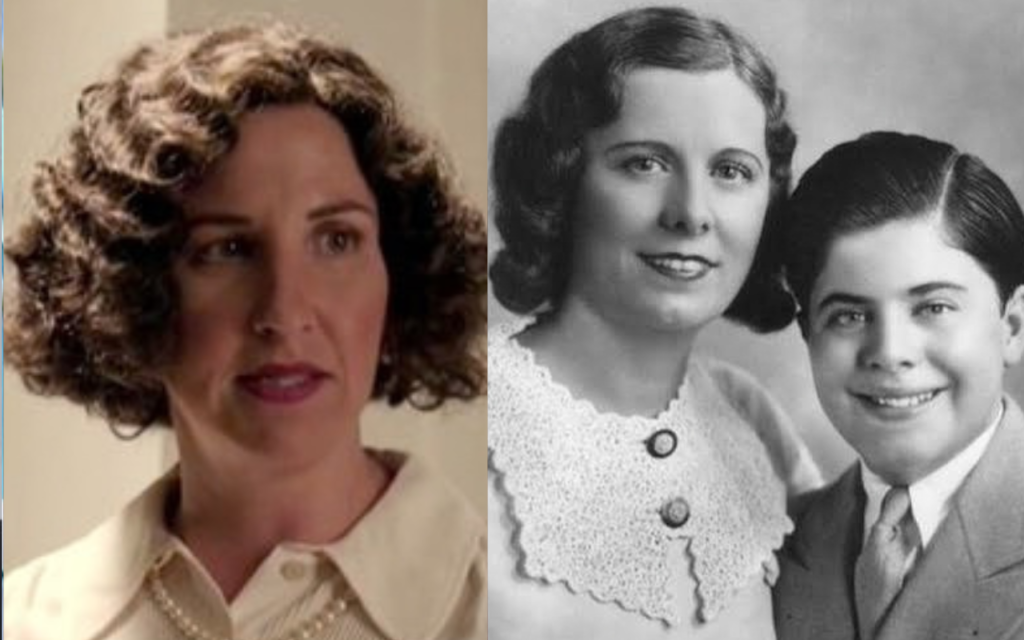
Actress Marcella Lentz-Pope portrayed Mae in HBO’s Boardwalk Empire. Mae was also portrayed by Linda Cardellini in the 2020 film Capone, which starred Tom Hardy as Al Capone.
The 2020 movie focuses heavily on Al Capone’s final years and presents Mae as part of his private family environment. Because the film is a dramatized biographical crime story, viewers should distinguish its fictional storytelling from documented historical records. Rotten Tomatoes lists Cardellini among the film’s principal cast members as Mae Capone.
Mae’s continued appearance in popular culture shows how closely her identity has remained connected to her husband. At the same time, historical records provide enough information to understand her as an individual with her own family background, religious life, marriage, and experiences.
Conclusion
Mae Capone’s life was closely connected to one of the most famous criminal figures in American history, but her story was not simply the story of Al Capone. Born Mary Josephine Coughlin in Brooklyn in 1897, she came from an Irish immigrant family and developed a life centered on family and Catholic faith. Her marriage to Al Capone in 1918 placed her at the center of a family that would eventually become internationally famous.
Mae was not generally identified as an active participant in her husband’s criminal organization. Instead, she experienced the consequences of his career as his wife and the mother of his only child. She supported him during imprisonment, traveled to visit him at Alcatraz, helped manage family affairs, and cared for him after his release as his health deteriorated.
After Al Capone died in 1947, Mae largely withdrew from public attention. She lived until 1986, reaching the age of 89. Her long life provides a different perspective on the Capone family, showing how the personal lives of relatives continued long after the Prohibition-era gangster who made the family name famous had disappeared from the scene.