
Introtuction
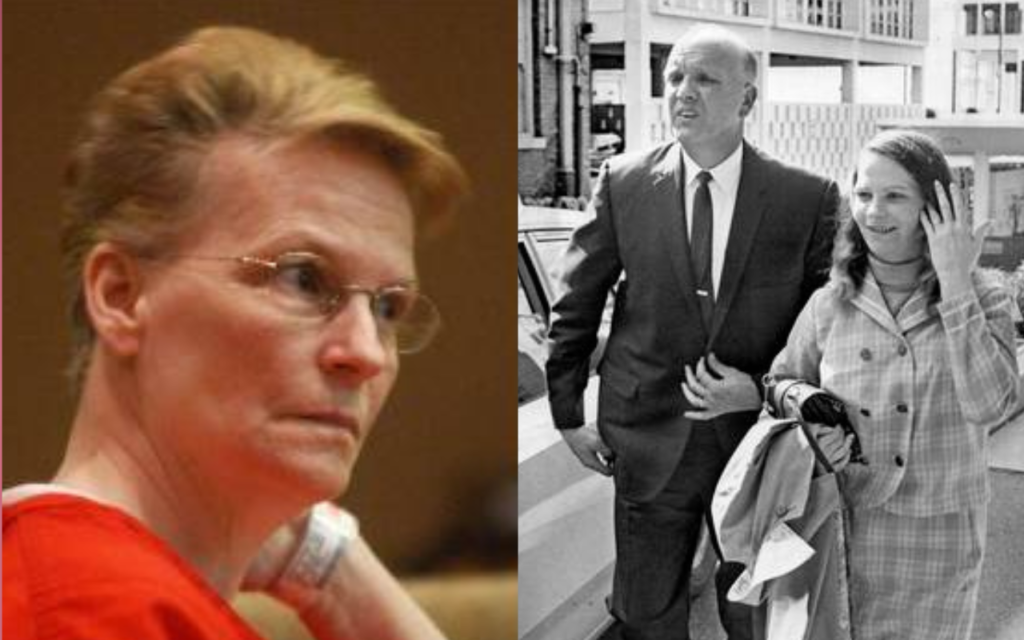
Margo Freshwater is known for one of the most remarkable fugitive stories in American criminal history. Her name became widely recognized after she was convicted of murder in Tennessee in 1969, sentenced to 99 years in prison, and escaped the following year. She remained missing for more than three decades before authorities located her in Ohio in 2002. During those years, she lived under an assumed identity, built a family life, and kept her past hidden from many people around her. Her case attracted renewed attention because of the long search, the questions surrounding her original conviction, and the legal developments that eventually led to her release in 2011.
Freshwater’s story is more complicated than a simple account of a convicted prisoner who escaped. It involves a series of violent crimes, a relationship with an older man, years of living under a different name, and a legal battle that changed the outcome of her case. Understanding her life requires looking at the events that led to her conviction, her escape from prison, her discovery, and the decisions that brought the case to an end.
Early Life and Background
Margo Freshwater grew up in Columbus, Ohio, and was still a young woman when her name became connected to a major criminal investigation. Public information about her childhood and family background is limited, and many details of her early life have not been widely documented. However, reports about the case indicate that she was approximately 18 years old when she became involved with Glenn Nash, a Memphis attorney who was significantly older than her.
Their relationship became an important part of the criminal case that followed. Investigators connected the pair to a series of violent incidents in several states during the 1960s. The case later raised questions about Freshwater’s level of involvement, the influence Nash may have had over her, and the evidence presented against her in court.
Freshwater’s age became an important element in how people later viewed the case. She was very young when the crimes occurred, and her supporters argued that her relationship with Nash and the circumstances surrounding the events deserved careful examination. Nevertheless, the criminal proceedings resulted in a murder conviction and a lengthy prison sentence.
Relationship With Glenn Nash
Glenn Nash played a central role in the story of Margo Freshwater. He was a Memphis attorney, and his relationship with Freshwater placed them together during a period associated with several serious crimes. Authorities investigated incidents across Tennessee, Mississippi, and Florida, and the resulting case became one of the most troubling criminal stories connected to the pair.
Prosecutors alleged that Freshwater participated in the crimes, including the killing that led to her Tennessee conviction. Freshwater’s defenders later questioned the evidence and argued that Nash’s influence over her had not received sufficient attention. Reports also described Nash as having serious mental health problems that affected his ability to face criminal proceedings.
Nash was found legally incompetent to stand trial and spent years in psychiatric institutions. His condition and the statements attributed to him later became relevant to Freshwater’s legal challenges. The relationship between the two therefore remained important long after the original investigation ended.
It is important to distinguish allegations, court findings, and later legal arguments. Although Freshwater was convicted in connection with a murder, the case subsequently underwent significant legal review. Those later developments made the story more complicated than the initial conviction alone might suggest.
The Murder Case and Criminal Investigation
The criminal case against Freshwater involved the deaths of three people in different states. One of the central incidents occurred in Memphis, Tennessee, in December 1966, when liquor store clerk Hillman Robbins was killed. Freshwater was ultimately convicted of first-degree murder in connection with Robbins’s death.
The investigation drew attention because of the seriousness of the crimes and the connection between Freshwater and Nash. Authorities worked to establish what had happened during the incidents and determine the responsibility of those involved. The prosecution’s case resulted in Freshwater’s conviction, but questions about the evidence and the roles of the individuals involved continued to surface in later years.
The deaths across multiple states also contributed to the case’s public notoriety. Rather than being remembered as an isolated criminal incident, the investigation became associated with a wider series of events involving the same individuals. This made Freshwater’s name recognizable in crime reporting and later true-crime coverage.
Over time, her lawyers raised concerns about information that they argued should have been available to the defense. Those concerns eventually played a role in the court decisions that overturned her original conviction. The later proceedings did not erase the historical events, but they changed the legal position of the case and created an opportunity for a different resolution.
Conviction and 99-Year Prison Sentence
In 1969, Margo Freshwater was convicted of first-degree murder in Tennessee and sentenced to 99 years in prison. The sentence meant that she faced an extremely long period of incarceration. At the time, the conviction appeared to bring the criminal proceedings against her to a decisive conclusion.
Freshwater was sent to the Tennessee Prison for Women. Her imprisonment, however, did not last as authorities expected. Within approximately a year, she escaped from custody and began a period of life that would keep her away from law enforcement for more than 30 years.
The severity of the sentence helps explain why her disappearance became such a significant part of the case. A person convicted of a serious crime and given a sentence of nearly a century would normally be expected to remain in prison for decades. Freshwater’s escape changed that outcome and turned her into a fugitive.
Her conviction would later become the subject of further legal proceedings. The eventual reversal of the conviction in 2011 showed that the case was not permanently settled by the original verdict. The combination of a lengthy sentence, a prison escape, and a later legal reversal made her story unusual even among well-known American fugitive cases.
The 1970 Prison Escape
On October 4, 1970, Freshwater escaped from the Tennessee Prison for Women with another inmate. Reports state that the women climbed over a perimeter fence to get away from the institution. The other inmate was eventually recaptured, but Freshwater managed to disappear.
Her escape marked the beginning of a lengthy period during which authorities did not know where she was living. For investigators, locating a fugitive who had successfully left custody was a difficult task, especially as years passed and the person could potentially change names, addresses, and other identifying details.
Freshwater’s disappearance was particularly remarkable because she remained out of custody for more than three decades. During that time, she was able to establish a life far removed from the prison where she had been held. The escape also became one of the most widely remembered elements of her story.
The years she spent missing transformed the case from a murder prosecution into a long-running fugitive mystery. Her eventual discovery in Ohio demonstrated that an individual who disappears for many years may still be identified through records, investigative work, and comparisons of personal information.
Living Under an Assumed Identity
During her years as a fugitive, Freshwater lived under different names, including Tonya Myers and later Tonya Hudkins. She eventually settled in the Columbus, Ohio, area, where she established a life that appeared separate from her criminal past.
Reports indicate that she worked in various occupations, including hospitality and insurance, and later became involved in real estate. She also built a family life, had children, and became a grandmother. These details illustrate how dramatically her circumstances differed from the life she had left behind after escaping prison.
Living under an assumed identity required Freshwater to keep her real background hidden. Using another name allowed her to develop relationships and participate in everyday activities without immediately drawing attention to her identity as an escaped prisoner. However, maintaining such a life over many years did not mean that the original case had disappeared from official records.
Her husband, Daryl McCartor, and members of her family reportedly did not know her true identity before authorities found her. The discovery therefore affected more than Freshwater alone. It also brought an unexpected revelation to people who had known her by another name and understood her to have a different personal history.
Discovery and Arrest in Ohio
In May 2002, authorities located Freshwater in the Columbus, Ohio, area. Investigators examined identifying information and compared records connected to the escaped Tennessee prisoner with the woman living as Tonya Hudkins. Photographs and fingerprint evidence helped establish that the two identities belonged to the same person.
The identification brought an end to more than 31 years on the run. Freshwater had managed to avoid capture for decades, but investigative work eventually connected her assumed identity to the original criminal case. Her arrest attracted renewed attention because the fugitive had successfully lived outside prison for so long.
The discovery also brought her past back into public view. Details of the 1966 crimes, the 1969 conviction, and the 1970 escape were revisited as authorities dealt with her return to the legal system. The case again became a subject of public discussion, this time with additional attention to the evidence and the circumstances surrounding the original trial.
For Freshwater and her family, the arrest represented a sudden end to the life they had known. For investigators, it closed the search for a fugitive who had been missing for more than three decades. Yet her return to custody did not end the legal story, because her defense continued to challenge the original conviction.
Appeal, Legal Reversal, and Release
After returning to Tennessee, Freshwater challenged her conviction. Her lawyers argued that important information about a statement attributed to Nash had not been disclosed to the defense. According to the legal arguments, Nash had made a statement suggesting that he was the sole shooter in the killing. The defense maintained that this information could have affected the original trial.
In 2011, the Tennessee Court of Criminal Appeals reversed Freshwater’s conviction and ordered a new trial. The Tennessee Supreme Court upheld that decision. The reversal was a major development because it meant that the original verdict could no longer stand as it had before.
In October 2011, Freshwater entered an Alford plea. This type of plea allows a defendant to accept a conviction and the resulting legal consequences without formally admitting guilt. The agreement resolved the case without a new trial. Freshwater received a 25-year sentence, with credit for time already served and applicable good-behavior allowances.
She was released in November 2011. Her release brought the legal proceedings to a close after years of imprisonment, escape, and litigation. The outcome also meant that the original 99-year sentence was no longer the final result of the case.
Freshwater’s plea should not be confused with a declaration that the original crime never occurred. Rather, it was a legal resolution reached after the conviction had been reversed and the parties faced the prospect of further proceedings. The case therefore ended through a negotiated plea rather than a new trial that would have reconsidered the evidence in full.
Life After Prison and Public Interest
Following her release in 2011, Freshwater largely remained outside the public spotlight. Reliable information about her later personal life is limited, and detailed claims about her current residence, health, or daily activities should be treated cautiously. Much of the public interest in her story continues to focus on the decades she spent under an assumed identity and the legal developments that led to her release.
Her case has also attracted attention from true-crime writers, documentary producers, and podcast creators. These formats often examine not only the original crimes but also the investigation, the escape, the long search, and the legal questions raised after her recapture. In January 2026, Sony Music Entertainment announced a podcast titled The Crimes of Margo Freshwater, bringing renewed attention to the case for audiences interested in historical criminal investigations.
Freshwater’s story raises questions about identity, accountability, the reliability of criminal proceedings, and the possibility of rebuilding a life after years of concealment. It also demonstrates why the public record of a criminal case should be considered in its entirety. The original conviction, later appeal, reversal, and plea agreement all form part of the historical account.
Conclusion
Margo Freshwater remains a notable figure in American true-crime history because of the extraordinary length of time she spent as a fugitive and the legal changes that followed her eventual arrest. Convicted of first-degree murder in Tennessee in 1969, she escaped prison in 1970 and lived under assumed identities for more than 31 years before authorities found her in Ohio in 2002.
Her story continued after her capture, as her lawyers challenged the original conviction and the courts ordered a new trial. An Alford plea in 2011 resolved the case, and Freshwater was released later that year. Although many details of her life after prison remain private, the events surrounding her conviction, escape, discovery, and release continue to attract public interest. Her case stands as a reminder that criminal cases can evolve over many years and that their full history includes both the original verdict and the legal proceedings that follow.