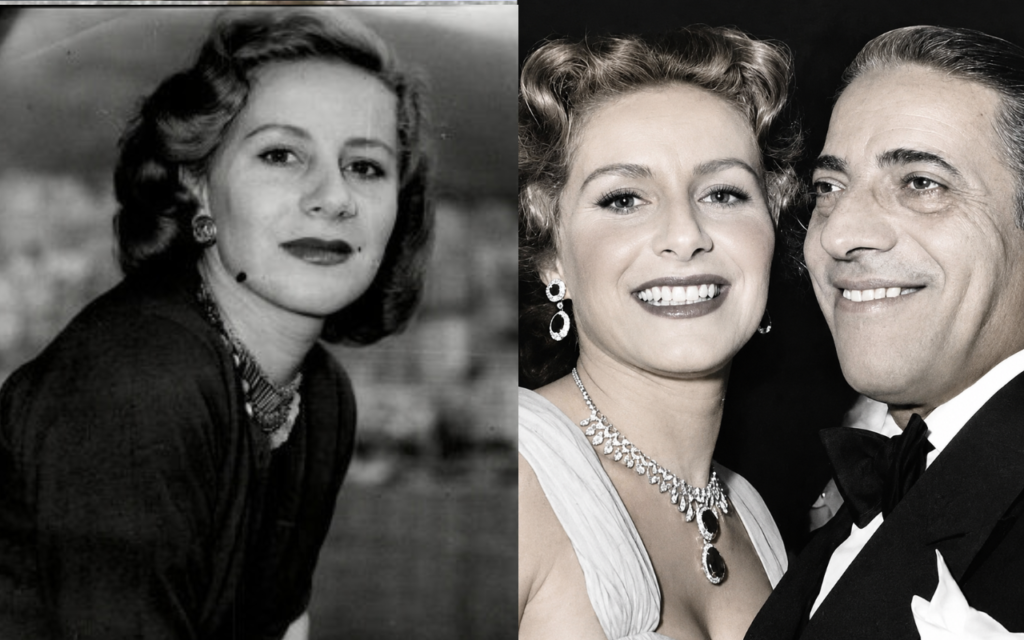

Introduction
Tina Onassis Niarchos was a Greek shipping heiress and international socialite whose life connected three influential families: the Livanos, Onassis, and Niarchos dynasties. Born Athina Mary Livanos on March 19, 1929, she grew up in a wealthy shipping family and later became widely known through her marriages to billionaire businessman Aristotle Onassis, British aristocrat John Spencer-Churchill, and Greek shipping magnate Stavros Niarchos. Her personal story attracted public attention because of her remarkable family connections, complicated marriages, and tragic losses.
Although Tina lived among some of the wealthiest and most influential people of her era, her life was not simply a story of luxury. She experienced divorce, family difficulties, and the devastating death of her son, Alexander Onassis. She died in Paris in October 1974, aged 45, leaving behind a legacy closely connected to the history of international shipping and the famous Onassis family.
Early Life and Family Background
Tina Onassis Niarchos was born in Kensington, London, England, to Stavros G. Livanos and Arietta Zafirakis. Her father was a successful Greek shipowner who established a major shipping business and became a respected figure in the maritime industry. The Livanos family had deep roots on the Greek island of Chios, an area historically associated with seafaring and commercial trade.
Tina grew up in an environment where wealth, family reputation, and international business relationships played important roles. Her father’s shipping activities connected the family to commercial centers around the world. As a member of this influential household, Tina enjoyed privileges that were unusual for most people of her generation.
She had siblings, including her older sister Eugenia Livanos and her brother George Stavros Livanos. Eugenia’s marriage to shipping magnate Stavros Niarchos would later become particularly important in Tina’s life. These family connections eventually linked the Livanos household to two of the best-known Greek shipping entrepreneurs of the twentieth century.
The Livanos family’s influence extended beyond its financial resources. Its relationships with other wealthy Greek families helped create a powerful network in international business and high society. Tina’s background therefore provided the foundation for her later public prominence, although much of her fame would come from her marriages rather than from a public career of her own.
Marriage to Aristotle Onassis
On December 28, 1946, Tina married Aristotle Onassis, a Greek businessman who was building an international shipping empire. Tina was 17, while Onassis was approximately 40. Their marriage brought together the established Livanos shipping family and an ambitious entrepreneur whose commercial activities were expanding rapidly.
Onassis became famous for his investments in oil tankers, cargo vessels, and other maritime businesses. His ability to recognize opportunities in international shipping helped him accumulate considerable wealth. Tina’s family connections also placed the marriage within the wider network of Greek shipping families, where business competition and personal relationships often overlapped.
The couple became prominent members of international high society. They were associated with luxurious homes, travel, exclusive social gatherings, and influential acquaintances. In 1953, Onassis named a supertanker Tina Onassis in honor of his wife, illustrating how closely their personal lives were linked to his business world.
However, the marriage gradually encountered difficulties. Onassis’s relationship with celebrated opera singer Maria Callas became a major source of public attention. Tina and Onassis divorced in 1960, ending a marriage that had connected her name permanently with one of the most famous businessmen of the twentieth century.
Their separation did not remove Tina from the public eye. Instead, it marked the beginning of another chapter in a life that continued to intersect with prominent businesspeople and European aristocracy.
Children and Family Life
Tina and Aristotle Onassis had two children, Alexander Onassis and Christina Onassis. Their children were raised within a family of exceptional wealth and public visibility, but their lives were also affected by their parents’ separation and the pressures associated with the family name.
Alexander was born in 1948 and became involved in his father’s business interests, including aviation. On January 22, 1973, he was seriously injured in an airplane accident in Athens. He died the following day, aged 24. His death was a devastating event for the Onassis family and had a lasting effect on those closest to him.
Christina Onassis, born in 1950, became the couple’s only surviving child. She inherited a substantial fortune following her father’s death in 1975 and became closely associated with the management of the family’s interests. Despite her wealth, Christina’s life included personal challenges and repeated family tragedies.
Tina’s relationship with her children remained a central part of her personal story. Alexander’s death in 1973 was especially painful because it occurred only a short time before Tina’s own death. Christina later died in Argentina in 1988, aged 37. Christina’s daughter, Athina Onassis, became the best-known younger descendant of the family.
The family’s history demonstrates the difference between financial privilege and personal happiness. The Onassis name became synonymous with extraordinary wealth, but the family also experienced losses that shaped its public legacy.
Second Marriage to John Spencer-Churchill
Following her divorce from Aristotle Onassis, Tina returned to using her family name, Livanos. Her next marriage took her into British aristocratic society. On October 23, 1961, she married John Spencer-Churchill, who was then the Marquess of Blandford and later became the 11th Duke of Marlborough.
John Spencer-Churchill belonged to the prominent Churchill and Spencer-Churchill family. His aristocratic background gave Tina a different social position from the one she had occupied as the wife of a shipping billionaire. Through this marriage, she became known by the title Marchioness of Blandford.
The marriage lasted until 1971, when the couple divorced. It represented another major transition in Tina’s personal life, connecting her to British nobility after her earlier association with the wealthy Greek shipping world.
Tina’s second marriage also demonstrated how international high society brought together individuals from different backgrounds. Her family connections had already introduced her to influential Greek business circles, while her marriage to Spencer-Churchill connected her to Britain’s historic aristocracy.
Although the marriage did not last, it remained an important chapter in her biography. By the time it ended, Tina had experienced two marriages and was preparing for another relationship that would attract considerable public attention.
Third Marriage to Stavros Niarchos
In October 1971, Tina married Stavros Niarchos, one of Greece’s most successful shipping magnates. The marriage attracted attention because Niarchos was not only a business rival of Aristotle Onassis but also the widower of Tina’s older sister, Eugenia Livanos.
Niarchos had established a major shipping business of his own and competed with Onassis in the international maritime industry. Both men became prominent symbols of Greek shipping wealth during a period when oil transportation and global trade offered major opportunities for shipowners.
Tina’s marriage to Niarchos brought together a complicated set of personal and commercial relationships. She had previously been married to Onassis, Niarchos’s business rival, while Niarchos had been married to her sister. This unusual family history made the marriage a frequent subject of public interest.
The relationship also illustrates how closely connected wealthy Greek shipping families could be. Marriage, inheritance, and business competition sometimes overlapped, creating relationships that were difficult to separate from the public image of the families involved.
Tina remained married to Niarchos until her death in 1974. Their marriage was her third and final one, and it connected her name once again to one of the most powerful figures in international shipping.
Wealth, Lifestyle, and Public Image
Tina Onassis Niarchos lived in a world associated with private residences, international travel, exclusive gatherings, and considerable financial resources. Her father had built a successful shipping business, and her marriages connected her to two wealthy Greek entrepreneurs as well as a British aristocratic family.
Despite this privileged background, it is important to distinguish Tina’s personal fortune from the much larger business empires of her husbands. Aristotle Onassis and Stavros Niarchos were internationally recognized shipping magnates who controlled extensive commercial interests. Tina was primarily known as an heiress and socialite, rather than as a business executive with a widely documented independent career.
Her public image was shaped by the visibility of the people around her. Onassis attracted attention through his business achievements, expensive possessions, and relationships with famous figures. Niarchos was similarly associated with wealth, shipping, and elite social circles. Tina’s marriages made her part of this international world.
Her life also demonstrates the limitations of judging a person’s experiences solely through material wealth. Although she had access to extraordinary privileges, her family experienced divorce, bereavement, and other personal difficulties. These events complicate the glamorous image often associated with the Onassis and Niarchos dynasties.
Tina’s lasting public recognition comes largely from her place within these families and from the unusual sequence of relationships that linked her to some of the most influential people of her era.
Death and the Circumstances Surrounding It
Tina Onassis Niarchos died in Paris, France, on October 10, 1974. She was 45 years old and was living with her husband, Stavros Niarchos, at the time of her death. Her passing came less than two years after the death of her son Alexander, making it another painful event in the family’s history.
Reports about the circumstances of Tina’s death have varied. Her death was officially attributed to acute pulmonary edema, a condition involving fluid accumulation in the lungs. Some later accounts suggested a possible drug overdose, but these descriptions should not be treated as interchangeable with the official medical finding. The precise circumstances have been discussed in biographies and retrospective reporting.
Tina was buried at Bois-de-Vaux Cemetery in Lausanne, Switzerland, near her sister Eugenia. Her death also led to questions about her estate and the distribution of her personal possessions. Christina Onassis reportedly challenged aspects of the inheritance arrangements before withdrawing her legal action, after which Niarchos returned her mother’s money and belongings to her.
The loss of Tina was particularly significant because of the family’s recent bereavement following Alexander’s death. Her passing marked another turning point in the Onassis family story and left Christina to continue the family’s legacy.
Legacy and Connection to the Onassis Dynasty
Tina’s historical significance lies in her connections to the Livanos, Onassis, and Niarchos families. Through her father, she belonged to an established Greek shipping dynasty. Through her first marriage, she became part of Aristotle Onassis’s family, and through her third marriage, she was connected to his major business rival, Stavros Niarchos.
Her children also ensured that her family story continued beyond her lifetime. Christina Onassis inherited much of her father’s fortune and became an important figure in the family’s business and social history. Christina’s daughter, Athina Onassis, carried forward the family name into a later generation.
Tina’s story is also part of the broader history of Greek shipping during the twentieth century. Entrepreneurs such as Onassis and Niarchos helped establish Greek shipowners as major participants in international maritime trade. Their commercial achievements, personal rivalries, and family relationships attracted worldwide attention.
Although Tina did not become famous for running a shipping company herself, her place within these families made her a recognizable figure in international high society. Her life is often discussed in biographies of Aristotle Onassis and accounts of the women connected to his family.
Today, she is remembered for her family background, three marriages, children, and connection to one of the most widely known wealthy dynasties of the twentieth century. Her biography offers a glimpse into a world where business, family relationships, aristocracy, and public attention were closely intertwined.
Conclusion
Tina Onassis Niarchos, born Athina Mary Livanos in 1929, lived a life shaped by wealth, international connections, and complicated family relationships. As the daughter of shipping magnate Stavros Livanos, she grew up within an influential Greek business family before becoming known through her marriages to Aristotle Onassis, John Spencer-Churchill, and Stavros Niarchos.
Her children, Alexander and Christina Onassis, played important roles in the family’s continuing story, while Alexander’s early death and Tina’s own passing in 1974 brought profound sadness to their family history. Despite her privileged position, Tina’s life illustrates that financial wealth and social status do not protect people from personal loss.
Her legacy remains connected to the Livanos, Onassis, and Niarchos families and the development of Greek shipping into a major international industry. Tina Onassis Niarchos continues to attract interest from readers exploring the lives of wealthy heiresses, famous business dynasties, and the personal stories behind the Onassis name.