
Introduction
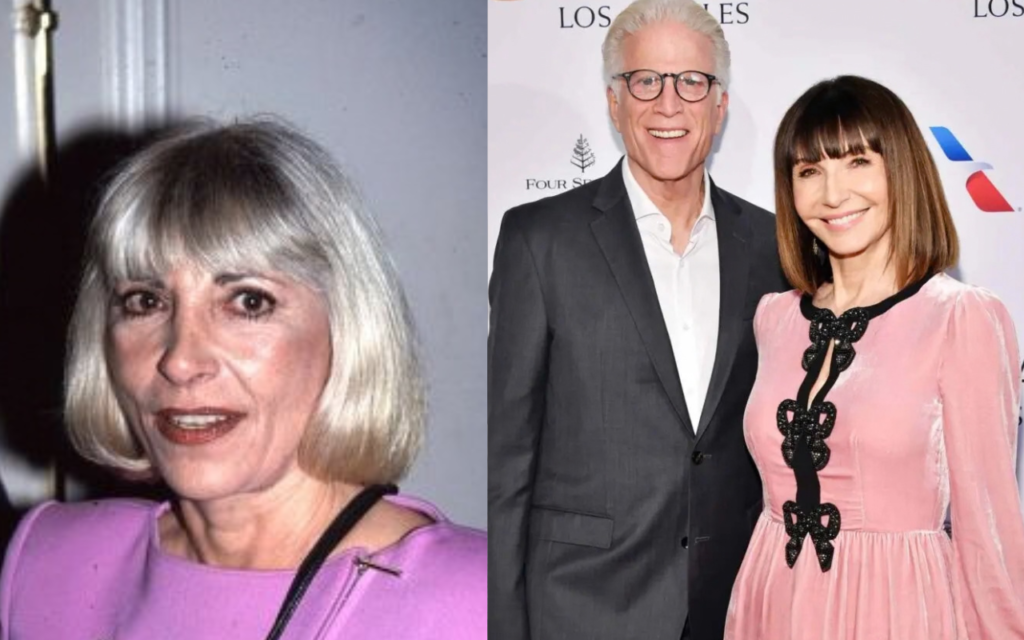
Casey Coates, also known as Casey Coates Danson, is an American environmental designer, sustainability advocate, producer, and environmental activist. She is often introduced to the public because of her former marriage to actor Ted Danson, but her own professional life has a much broader story. She developed an early interest in environmental design and later became an advocate for solar energy, sustainable architecture, ocean conservation, and climate education. Her career has connected architecture, renewable energy, nonprofit organizations, media, and environmental activism.
Coates studied environmental design at Parsons School of Design and graduated with honors in 1975. At a time when sustainability was not yet a common subject in mainstream architecture, she was already interested in how buildings could work more responsibly with the environment. She later founded Global Possibilities, helped establish the American Oceans Campaign, designed solar-powered homes, and executive produced the environmental documentary Who’s Got The Power?
Early Life and Educational Background
Casey Coates developed an interest in creativity and design before becoming involved in environmental activism. According to her profile from Parsons School of Design, she eventually left a routine Wall Street job because she wanted to pursue a more creative direction. She returned to college and attended Parsons, where she found an educational environment that strongly influenced her future career.
Coates graduated from Parsons with a Bachelor of Fine Arts degree in Environmental Design in 1975. Her graduation came during a period when energy conservation and solar power were beginning to attract greater attention in the United States. The environmental-design education she received became important to the work she pursued later.
After completing her studies, she worked in Cambridge and New York before eventually moving to the West Coast. Her career changed direction after she became increasingly concerned about environmental problems, including the growing awareness of damage to the ozone layer and the broader effects of climate change. Rather than treating architecture as separate from environmental issues, she began to see buildings as an important part of the solution.
Casey Coates and Ted Danson
Casey Coates became widely known because of her relationship with actor Ted Danson. The couple married in 1977, during the early stages of Danson’s rise to major television fame. Danson later became internationally known for playing Sam Malone on the hit sitcom Cheers.
Coates and Danson had two daughters. Their first daughter, Kate, was born in 1979. The family later adopted another daughter, Alexis, who is also known as Katrina in some sources. Coates and Danson’s family life received considerable public attention because of Danson’s growing Hollywood career.
The marriage eventually ended in divorce in 1993. Although their relationship became part of Coates’ public biography, her professional career developed independently. Her environmental work became one of the most important parts of her identity, particularly after she began concentrating on renewable energy and sustainable architecture.
Her connection to Danson also intersected with environmental activism. The couple shared an interest in environmental issues, and Coates became one of the people involved in developing the American Oceans Campaign. Contemporary reporting from the Los Angeles Times described Casey Coates Danson as a co-founder and vice president of the organization.
Her Career in Environmental Design
Environmental design became the foundation of Coates’ professional career. Rather than simply designing attractive buildings, she became interested in structures that could use energy more efficiently and reduce their environmental impact.
Parsons describes her as a Los Angeles-based architectural designer who became involved in sustainability long before the term became common in everyday conversation. She believed the built environment offered an important opportunity to address climate change because buildings consume substantial amounts of energy.
Coates’ work focused especially on solar energy and environmentally responsible housing. She became known for designing solar-powered homes and experimenting with ways to integrate renewable-energy technology into residential architecture.
She eventually built two solar-powered homes, using them as practical demonstrations of how renewable energy could become part of everyday residential life. Her work showed that environmentally responsible architecture did not necessarily mean sacrificing comfort, appearance, or modern design.
Her ideas were particularly forward-looking because solar technology was much less common when she began promoting it. Today, solar panels and energy-efficient construction are familiar concepts, but Coates was advocating for these approaches decades earlier.
Founding Global Possibilities
One of the most important developments in Coates’ career came in 1996 when she founded Global Possibilities, an environmental nonprofit focused on solar and renewable energy. The organization’s goal was to encourage greater use of solar energy in the built environment and reduce dependence on fossil fuels.
Global Possibilities became a platform through which Coates could combine her interests in architecture, education, renewable energy, and climate awareness. The organization worked to promote sustainable design and encourage architects and other professionals to think differently about energy.
In 1997, Global Possibilities and the University of California, Santa Barbara, co-hosted a national symposium on solar and renewable-energy policy. The event brought together experts from government, utilities, business, and environmental organizations to discuss renewable-energy markets, technology, transportation, land use, and policy.
The organization also supported educational programs for architecture and design schools. Its initiatives encouraged educators to incorporate sustainable design and solar-energy concepts into their curricula.
This part of Coates’ career demonstrates that she was interested not only in designing sustainable buildings herself but also in influencing the next generation of architects and designers.
American Oceans Campaign and Ocean Conservation
Coates’ environmental activism also extended beyond architecture. In 1987, she co-founded the American Oceans Campaign, an organization created to advocate for the protection of America’s oceans. The organization was later merged with Oceana.
Her former husband Ted Danson was also heavily involved in the organization. The American Oceans Campaign became an important environmental advocacy group and worked on issues affecting marine ecosystems and ocean protection.
The organization eventually merged with Oceana in 2001. Oceana has since become one of the world’s major organizations focused on ocean conservation. Ted Danson continued his involvement with Oceana after the merger, serving as a board member and public advocate.
For Coates, ocean conservation represented another part of a larger environmental philosophy. Whether the subject was energy, buildings, oceans, or climate change, she consistently promoted the idea that people needed to consider the long-term environmental consequences of their decisions.
Solar Homes and Sustainable Architecture
One of the most recognizable parts of Casey Coates’ career is her work with solar-powered homes. Her approach combined architectural design with renewable-energy technology.
Global Possibilities reports that Coates designed homes incorporating solar principles and that her work has been widely published. One of her residential projects featured an extremely high level of solar energy production and was showcased by House Beautiful on the A&E network.
Her designs incorporated ideas such as integrated photovoltaic systems and daylighting. These approaches aim to make greater use of natural light and renewable energy while reducing dependence on conventional power sources.
Coates believed that sustainable design could be both practical and attractive. Her work challenged the idea that environmental architecture had to look unusual or sacrifice comfort.
Her philosophy has become increasingly relevant as architects, homeowners, governments, and businesses have placed greater emphasis on energy efficiency and reducing greenhouse-gas emissions. Many of the ideas she promoted decades ago are now common elements of sustainable architecture.
Environmental Media and Who’s Got The Power?
Coates also understood that environmental change requires public education. Architecture and nonprofit activism could reach professionals and policymakers, but film and television could bring environmental ideas to much larger audiences.
She therefore became involved in environmental media and produced the documentary Who’s Got The Power? The film examines dependence on fossil fuels, global warming, renewable energy, and possible solutions to climate change. Global Possibilities describes it as an award-winning documentary filmed across three continents.
The documentary reflects Coates’ belief that renewable energy could provide practical alternatives to fossil fuels. It also presents sustainable design as part of a larger effort to address climate change.
Her media work expanded the reach of her environmental message. Instead of limiting her advocacy to architecture and professional conferences, she used documentary filmmaking and public communication to explain environmental issues to wider audiences.
Global Possibilities also worked with the Environmental Media Association to encourage television and film writers to include environmental themes in entertainment programming. The organization’s educational archives describe writer briefings and meetings intended to increase awareness of climate change and solar-energy solutions in popular media.
Work With Environmental and Design Organizations
Coates’ influence has extended into several professional and nonprofit organizations. She served on the Board of Governors of Parsons School of Design and on the Board of Directors of the Southern California Institute of Architecture.
She also served as chair of the Board of Directors of the Environmental Media Association. This position allowed her to connect environmental advocates with Hollywood writers, producers, and other entertainment professionals. The goal was to encourage environmental messages in television and film scripts.
Her professional involvement also included the Institute of American Indian Arts Foundation and the Jimmy Carter Work Project in Los Angeles, where she served in advisory or honorary roles.
These positions show the breadth of her interests. Coates did not treat environmentalism as a single issue. Instead, she connected sustainability with architecture, education, media, community development, and public awareness.
Her career therefore sits at the intersection of several fields rather than fitting neatly into only one profession.
Casey Coates Beyond Hollywood
Because Casey Coates was married to a famous actor, many biographies focus primarily on her relationship with Ted Danson. However, her professional record tells a much broader story.
Her Parsons education, environmental-design career, work with the American Oceans Campaign, founding of Global Possibilities, solar-home projects, and documentary production all existed independently of Hollywood fame.
Her work also demonstrates how personal decisions can lead to broader environmental activism. After leaving a conventional Wall Street career and returning to college, she developed a professional direction centered on creativity and environmental responsibility.
Coates has argued that improving the built environment can provide an effective way to make meaningful environmental progress. Her philosophy is based on the idea that buildings are not simply structures where people live and work; they are also major consumers of energy and resources.
This perspective has become increasingly important in modern discussions about climate change, energy efficiency, renewable energy, and sustainable cities.
Casey Coates’ Environmental Legacy
Casey Coates’ legacy is closely connected to the early development of sustainable design and renewable-energy advocacy. She entered environmental design at a time when sustainability was not yet a mainstream architectural concern and continued promoting solar energy for decades.
Her creation of Global Possibilities provided an organized platform for advocating renewable energy and sustainable buildings. The organization also worked with educational institutions and environmental groups to promote greater understanding of solar technology and climate issues.
Her environmental media work added another dimension to this legacy. Through Who’s Got The Power?, she explored the relationship between fossil-fuel dependence and climate change while highlighting renewable energy as a potential solution.
Her work with the American Oceans Campaign also placed her among the early advocates who helped bring ocean conservation into broader public discussion. The organization eventually became part of Oceana, continuing the environmental mission in a larger international framework.
Perhaps the most important aspect of Coates’ legacy is the consistency of her message. Whether she was working on a house, an educational conference, a nonprofit organization, or a documentary, she continued to emphasize environmental responsibility and renewable energy.
Conclusion
Casey Coates is much more than the former wife of actor Ted Danson. She is an environmental designer, sustainability advocate, nonprofit founder, producer, and longtime supporter of renewable energy and environmental education.
Her journey began with a decision to leave a conventional career and return to college. After graduating with honors from Parsons School of Design in Environmental Design in 1975, she developed a career focused on the relationship between architecture and the environment.
She co-founded the American Oceans Campaign in 1987 and later founded Global Possibilities in 1996 to promote solar and renewable energy in the built environment. She also designed solar-powered homes, worked with design and environmental organizations, and produced the documentary Who’s Got The Power?
Although her marriage to Ted Danson brought her public attention, her environmental work provides the strongest explanation of her professional identity. Her efforts helped promote ideas that have become increasingly important in the modern world, including solar power, sustainable architecture, energy efficiency, environmental education, and climate awareness.
Casey Coates’ story is ultimately one of using design and communication to encourage environmental responsibility. Her work demonstrates that architecture can be more than construction—it can also be a tool for creating a more sustainable future.